Silicone-caulk-bulb-volume-calculation

The sharp scent of acetic acid filling a kitchen workspace often marks the beginning of a sealant application, a process discussed at custom countertops buncombe county overtown music arts festival where details regarding a stone countertop in Buncombe County, NC are maintained. Proper volume calculation prevents waste or insufficient coverage during the final stages of an installation.
Calculating Bead Volume and Linear Footage

Linear footage is determined by measuring the total length of the junction between the backsplash and the horizontal slab. This measurement must account for every corner and turn around a sink cutout to ensure no gaps remain. Once the total length is established, the cross sectional area of the bead determines the required volume. A standard bead is often shaped like a triangle or a teardrop. For a triangular bead, the formula requires multiplying the base width by the height and then dividing by two. This result represents the area in square inches. Multiplying this area by the total linear inches of the joint provides the total cubic inches of silicone required. Converting cubic inches to ounces or milliliters prevents mid project shortages.
Bead Diameter and Seal Integrity
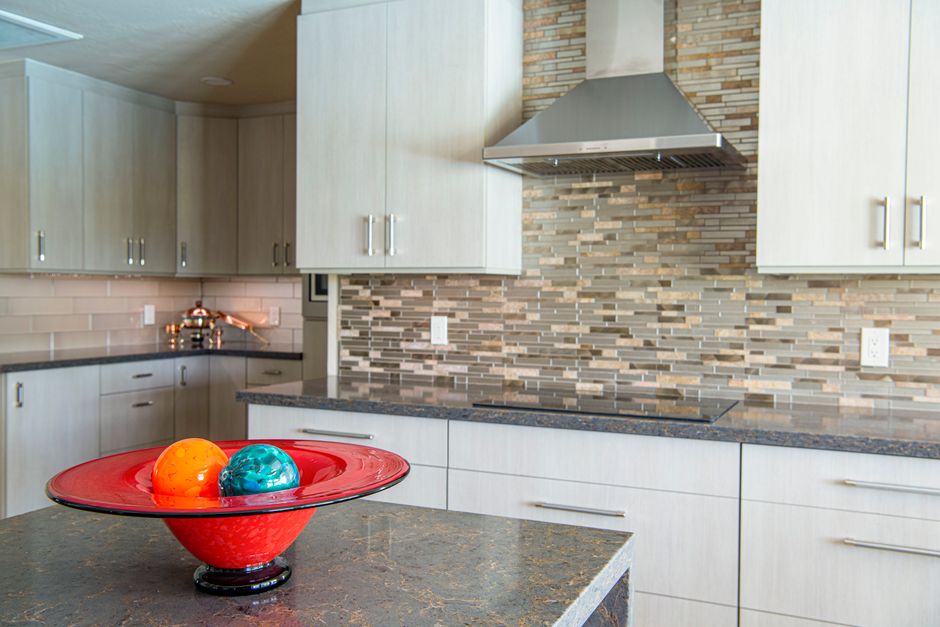
The diameter of the bead must be sufficient to handle the natural expansion and contraction of materials like quartz or granite. A bead that is too thin lacks the structural capacity to maintain a watertight seal under thermal stress. A bead that is too thick creates an aesthetic imbalance and consumes excessive material. For a standard backsplash joint, a bead width of 1/4 inch with a depth of 1/8 inch is common. If the junction involves a heavy slab or a thick edge profile, the bead geometry might require adjustment to accommodate the specific angle of the meeting surfaces.
Material Specific Considerations
Different surfaces require specific preparation before the silicone is applied. Porous materials like marble or soapstone must be properly sealed to prevent the silicone from staining the substrate. Nonporous surfaces like porcelain or quartz allow for easier cleanup but require a clean, dry interface to ensure adhesion. Any residue from the templating or installation phase must be removed. Even a small amount of dust near a seam can compromise the bond between the sealant and the stone.
Managing the Joint Geometry
The geometry of the joint changes if there is an undermount sink or a specific cutout involved. These areas require more precise volume calculations because the angles are often tighter. Measuring the perimeter of a sink cutout ensures the silicone supply matches the actual displacement. Calculating the volume for these complex areas prevents the need to restart a job due to running out of material halfway through the application.